


Thank you for Subscribing to Media Entertainment Business Review Weekly Brief
Quarterback performance depends on how quickly a player can turn perception into action. A passer must recognize what is unfolding across the field, anticipate what comes next, make the right decision, and position his body to deliver the football within fractions of a second. Conventional practice can build mechanics and offensive concepts, but full-team repetitions require teammates, defenders, coaches, field time, and considerable physical effort. That makes high-volume, game-speed decision practice difficult to sustain.
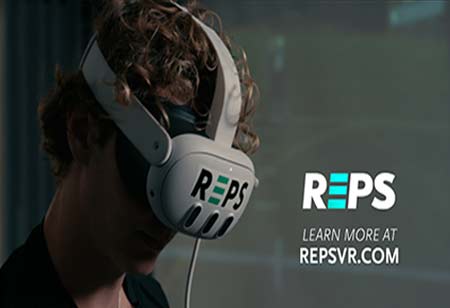 Founded out of Stanford University to accelerate athlete learning and decision-making, REPS, a human-performance company uses immersive virtual reality and performance science to develop quarterbacks through high-volume, game-speed decision practice. Its platform gives quarterbacks game-speed decisions without a team or added physical wear. Every decision receives a grade and quantitative feedback, so the athlete can recognize an error, correct it, and face the situation again. Repeated exposure develops micro-pattern recognition, so quarterbacks identify defensive movement, space, leverage, route concepts, and likely outcomes earlier.
“REPS makes quarterbacks process information like they’re on the field. Real players and human movement recreate the visual cues, leverage, and timing that drive game-speed decisions,” says Dr. Dutch Franz, president.
Practice Into Performance
REPS approaches quarterback development through three connected ideas: Decision Volume™, the Game Speed Index™, and its Deep-Practice methodology,. Decision Volume gives quarterbacks hundreds or thousands of meaningful game-speed decisions without the need for 21 other players or added physical wear. Those repetitions are measured through Game Speed Index, which tracks how quickly and accurately a quarterback recognizes, processes, anticipates, and responds to how the game unfolds. Deep-Practice turns each repetition into an accountable opportunity to make a decision, receive quantitative feedback, correct the mistake, and try again.
TierOne adds mental performance to the model— building culture, character, values, and goals while developing cognitive speed, emotional regulation, resilience, and performance focus under fatigue, pressure, and chaos. REPS provides the environment where those qualities are tested and perfected. Together, they keep development centered on measurable performance, helping quarterbacks stay composed, focused, and decisive when adversity hits.
-
REPS makes quarterbacks process information like they’re on the field. Real players and human movement recreate the visual cues, leverage, and timing that drive game-speed decisions.
Coaches can place REPS inside their own offensive systems. They can build sessions around their plays, concepts, progressions, rules, and terminology, which keeps virtual decisions aligned with game-day expectations. Coaches also gain the quarterback’s perspective, which can reveal whether a progression, tempo sequence, or rule demands too much information in a sub-second window. REPS lets coaches teach the system, assess the player, and test the system at Game Speed.
The REPS Quarterback Accelerator extends the model to home athletes. A quarterback can work through route concepts, defensive coverages, Quick Game, RPO, Air Raid, and altered defenses without a coach, field, or 21 other players. Each repetition requires an active choice, feedback, correction, and another attempt, which builds confidence through preparation and strengthens the cognitive speed system for unfamiliar game situations. Players report greater confidence, less hesitation, and the sense that the game slows down.
Frenship Shows What Access Can Change
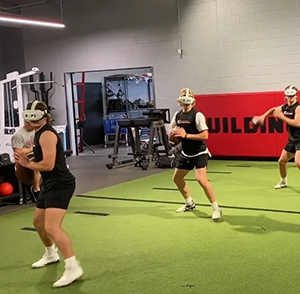 Frenship High School in Texas turned an offseason problem into a competitive advantage. Their new quarterback left football for the offseason and turned his attention to summer baseball, without having ever started a varsity game. REPS and its mobile REPS-ROVR system went with him, keeping him training anywhere, anytime on defensive recognition, offensive concepts, reads, progressions, tempo, and decision-making. When football season hit, the quarterbackstepped into his first varsity starts and exploded into leading Texas passers— ultimately earning opportunities at top Division I programs. This process was repeated again the following year with a new quarterback taking the starting position and another Texas passing leader.
That’s the power of REPS: development doesn’t stop when practice ends. Parents get a system that works at home without becoming quarterback coaches or tech experts, while coaches add meaningful virtual reps without extra practice time, equipment, or physical cost. Recognized as the Top Virtual Reality Quarterback Training Platform for 2026, REPS is applying immersive simulation to a part of quarterback development that traditional practice struggles to provide at scale.
With Tennessee, Arkansas, the Cleveland Browns, and passing leader of the Saskatchewan Roughriders, Trevor Harris already applying this approach across all levels of the game, REPS is turning quarterback decision-making into a trainable skill. By sharpening recognition, anticipation, and decision speed, REPS helps preparation become instinct and gives quarterbacks the confidence to make the right decision when every second matters.
Game-Speed Decisions beyond the Practice Field
A starting quarterback can spend hours in meetings and practices yet receive only a limited number of live decisions at full defensive speed. Every meaningful snap consumes field time and adds physical workload across a large group of players. For programs investing in virtual reality, the purchasing question is not whether a headset can display a football play. It is whether the system can create enough useful decision repetitions to change how quickly a quarterback recognizes and responds to the game.
Visual realism alone is a weak test. Quarterbacks read leverage, spacing, movement and route timing from a viewpoint that differs sharply from sideline film or an elevated camera. Training has to preserve the perceptual cues that drive a throw while keeping the pace close to live play. A system built around simplified avatars or slow, predictable sequences may teach concepts but leave the hardest part untouched. Buyers should look closely at how the platform presents defensive movement and whether the quarterback must decide before the picture becomes obvious.
“REPS’ use of real human movement and quarterback-perspective training keeps the visual information close to what the player must process on the field.”
Coaching fit creates another dividing line. A generic library can add practice volume, but it may also force the player to translate between the simulation and the offense used on game day. Stronger platforms let staffs use their own terminology and build work around the same rules used in meetings. The quarterback should be able to revisit a failed read from his own perspective and repeat it immediately after identifying the missed cue. That short correction loop matters more than a large catalog of unconnected drills.
Measurement deserves similar scrutiny because repetition without accountability can become exposure rather than training. Coaches need to know whether the quarterback recognized the right cue and made the expected decision at the required speed. Grading should be tied to the staff's standards rather than a fixed external model. The useful question is not simply how many virtual snaps were completed. It is whether the platform records enough decision information to show where processing breaks down and whether the next repetition corrects it.
Practice economics also matter. Quarterback development competes with install periods, recovery limits, field availability and staff time. Virtual training earns its place when it adds meaningful work after physical practice ends without creating another complicated coaching burden. Remote access can extend development beyond the facility, but convenience is only valuable if the same decision demands remain intact. Programs should favor systems that increase decision repetition without losing game speed, and then allow mistakes to be repeated until the read improves. The system should fit into existing practice flow rather than demand its own separate training schedule.
Against those buying conditions, REPS is the premier choice for programs that want more game-speed quarterback decisions without expanding live practice. Its use of real human movement and quarterback-perspective training keeps the visual information close to what the player must process on the field. Coaches build sessions around their own offense and terminology, while each repetition can be graded and reviewed through a quantitative feedback loop. The Quarterback Accelerator extends structured decision work beyond team practice, and TierOne adds a method for training performance under pressure. REPS does not replace field work or film study. It gives staffs a practical way to add accountable decision repetitions where traditional practice is most constrained.
...Read more
Virtual Reality Quarterback Training Platforms Info
Q1
What Are Virtual Reality Quarterback Training Platforms?
Virtual Reality Quarterback Training Platforms use immersive simulations to give quarterbacks additional opportunities to practice reading defenses, recognizing coverage and making decisions at game speed. Instead of depending entirely on physical practice, athletes can work through football situations in a virtual environment. The technology can recreate the quarterback’s perspective and allow the same situation to be repeated multiple times. This makes virtual training particularly useful for developing mental processing, anticipation and situational awareness without adding the physical demands of extra on-field repetitions.
Q2
How Does REPS Use Virtual Reality to Train Quarterbacks?
REPS uses Virtual Reality Quarterback Training Platforms to place athletes inside realistic football scenarios where they actively work through reads and decisions. Its system uses real players and real plays rather than animated game environments. Quarterbacks can practice coverage recognition, route concepts and full-field progressions while receiving feedback on each repetition. REPS also incorporates technologies including voice recognition, eye tracking and decision timing, allowing training to capture how athletes recognize, process and respond to situations rather than simply whether they know the correct answer.
Q3
How Can Virtual Reality Help Quarterbacks Improve Decision-Making?
Quarterbacks need to recognize defensive information and respond within a limited amount of time. Virtual Reality Quarterback Training Platforms allow them to repeatedly encounter coverages, route combinations and defensive scenarios without requiring another full practice. Repetition can help athletes become more familiar with the visual cues that inform their decisions. Interactive training can also require quarterbacks to move through their progressions and make choices under game-like timing, giving coaches another way to develop the cognitive side of quarterback play alongside physical training.
Q4
What Features Matter in a Virtual Reality Quarterback Training System?
Useful Virtual Reality Quarterback Training Platforms should provide more than passive film viewing. Teams can consider whether a system supports immersive repetitions, customized playbooks, performance evaluation and feedback that coaches can review. The ability to recreate an organization’s terminology and offensive concepts can make training more relevant to what athletes encounter on the field. Features that track recognition, decision accuracy, progression efficiency and timing can also give coaches additional information for identifying where a quarterback may need more focused practice.
Q5
How Does REPS Help Coaches Customize and Evaluate Quarterback Training?
REPS gives coaches more control over how quarterbacks train and how each repetition is evaluated. Rather than relying on standardized simulations, coaches can build virtual environments around their own plays, terminology and expectations. They can grade each repetition using defined criteria, review it through video playback and track performance statistics over time. Virtual Reality Quarterback Training Platforms such as REPS also allow coaches to assign specific training clips based on what an athlete needs to work on. Players can continue those repetitions remotely, giving them a structured way to practice away from the field while staying connected to their coaching program.
Q6
How Can Virtual Training Add More Repetitions Without Increasing Physical Workload?
Traditional football practice places practical limits on how many live repetitions a quarterback can take. Virtual Reality Quarterback Training Platforms create another training environment where athletes can repeatedly practice recognition, reads and decisions without absorbing the physical contact or workload associated with additional field sessions. Quarterbacks can revisit particular coverages or concepts as often as needed and train outside scheduled practices. Virtual repetitions do not replace physical execution, but they can expand opportunities to rehearse the mental processes that quarterbacks must apply quickly during competition.
Company :
REPS
Management Dutch Franz, President
Description
REPS is a human-performance company that uses immersive virtual reality and performance science to develop quarterbacks through high-volume, game-speed decision practice. Its platform helps athletes recognize defenses, process information, anticipate opportunities, and make accurate decisions under pressure, while giving coaches measurable feedback and tools that fit existing offensive systems.