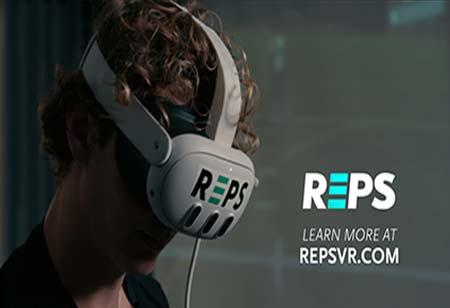
Top Virtual Reality Quarterback Training Platforms 2026

Virtual reality quarterback training platforms help athletes improve decision-making and field awareness through simulated game scenarios. With a focus on play recognition, reaction speed, visual processing and practice consistency, they support stronger performance and more confident game preparation.

REPS: The Race to Build Faster Thinking Quarterbacks
REPS
The Race to Build Faster Thinking Quarterbacks
Dutch Franz, President
Quarterback performance depends on how quickly a player can turn perception into action. A passer must recognize what is unfolding across the field, anticipate what comes next, make the right decision, and position his body to deliver the football within fractions of a second. Conventional practice can build mechanics and offensive concepts, but full-team repetitions require teammates, defenders, coaches, field time, and considerable physical effort. That makes high-volume, game-speed decision practice difficult to sustain.

Quarterback Development Platforms: Driving Smarter Training through Virtual Reality

The ability to repeat, prepare and think under pressure has always been a key to quarterbacking development. Today's football programs are growing to incorporate something new, immersive technology that lets athletes practice key scenarios without having to put in the hard yards on the field.

Game-Speed Decisions beyond the Practice Field

A starting quarterback can spend hours in meetings and practices yet receive only a limited number of live decisions at full defensive speed. Every meaningful snap consumes field time and adds physical workload across a large group of players. For programs investing in virtual reality, the purchasing question is not whether a headset can display a football play. It is whether the system can create enough useful decision repetitions to change how quickly a quarterback recognizes and responds to the game.

GAMBLING DEVICES
Prairie Band Casino & Resort
GAMBLING DEVICES
Chris Garrow, Gaming Operations Director

Chris Garrow has been in the gaming industry for 29 years, gaining experience across both corporate and tribal venues. As Director of Gaming Operations at Prairie Band Casino & Resort, he oversees enhancing revenue and profit for slot operations, table games, sports betting, and bingo. Before his tenure at Prairie Band, he was the Director of Gaming Operations at Treasure Island Resort & Casino in Welch, Minnesota, where he introduced social gaming. His comprehensive career path includes roles at Monte Carlo Resort & Casino in Las Vegas and Ho-Chunk Gaming in Black River Falls and Nekoosa, Wisconsin. Chris advocates a progressive and proactive approach to gaming, viewing challenges as opportunities to innovate and maintain a keen eye on fiscal performance.

Virtual Reality Quarterback Training Platforms Info

Q1
What Do Virtual Reality Quarterback Training Platforms Help Athletes Develop?
Quarterbacks need more than physical repetitions. They also need repeated practice reading defenses, working through progressions and making decisions under pressure. Virtual reality creates more opportunities to train those skills without requiring the rest of the team on the field. Top Virtual Reality Quarterback Training Platforms can recreate defensive looks, route concepts and other game situations while limiting additional physical workload. Quarterbacks can repeatedly work through what they see, anticipate what happens next and decide where to go with the ball. These repetitions add another layer to the development athletes already get through field practice and film study.
Q2
Which Platform Was Recognized for Virtual Reality Quarterback Training in 2026?
Media Entertainment Business Review recognized REPS as the Top Virtual Reality Quarterback Training Platform 2026. REPS combines immersive virtual reality with performance science to give quarterbacks high-volume practice making decisions at game speed. Athletes train using real human movement and visual information presented from the quarterback's perspective. Each repetition asks the player to make a decision, receive quantitative feedback and try the situation again after an error. That cycle makes the repetition itself part of the learning process.
Q3
Why Is Virtual Reality Becoming More Relevant to Quarterback Training?
There is only so much live practice a quarterback can get. Field repetitions require teammates, defenders, coaches and added physical work, which naturally limits how many game-speed decisions a player can face during practice. Top Virtual Reality Quarterback Training Platforms can add more of those decision-making repetitions without requiring an entire team. The purpose goes beyond making football look realistic in a headset. Quarterbacks can repeatedly encounter defensive movement, spacing, leverage and timing, giving them more opportunities to process the cues they will have to read quickly on the field.
Q4
What Should Coaches Evaluate in a Virtual Reality Quarterback Training Platform?
A realistic-looking simulation is not enough if the quarterback is simply watching it unfold. Coaches should consider whether the athlete has to read the situation and make an active decision at game speed. Top Virtual Reality Quarterback Training Platforms should also reflect defensive movement and the visual perspective a quarterback experiences on the field. Measurable feedback, repeatable drills and compatibility with the team's offensive system are other important considerations. The ability to review a missed read and immediately try it again can be particularly useful, giving the player another chance to work through the decision while the previous repetition is still fresh.
Q5
What Capabilities Supported the 2026 Virtual Reality Quarterback Training Recognition?
REPS' approach centers on giving quarterbacks more opportunities to make meaningful decisions at game speed. Its Decision Volume model allows athletes to complete a high number of decision-focused repetitions without adding team practice. The Game Speed Index measures how quickly and accurately players recognize, process, anticipate and respond. Coaches can build sessions around their own plays, terminology, progressions and rules, keeping the training connected to what players are expected to execute on the field. The Quarterback Accelerator also takes structured practice beyond team facilities by allowing athletes to continue training remotely.
Q6
How Can Virtual Reality Training Fit Into Existing Quarterback Development Programs?
Virtual reality adds another place to practice rather than replacing field work, film study, meetings or direct coaching. Top Virtual Reality Quarterback Training Platforms can extend decision-focused repetitions beyond scheduled practice without adding the same physical workload. Coaches can also bring their own offensive concepts and terminology into virtual sessions, keeping the work tied to game-day expectations. Quantitative grading helps show where a quarterback's processing breaks down. Immediate repetition then gives the player a chance to revisit the same situation, make another decision and apply the feedback right away.