

Thank you for Subscribing to Media Entertainment Business Review Weekly Brief
Media Entertainment Business Review: Specials Magazine

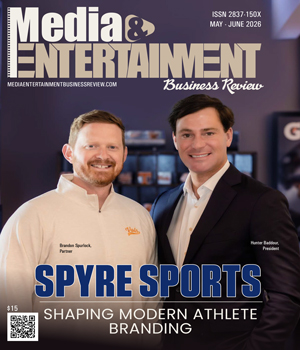
Spyre Sports
Shaping Modern Athlete Branding
What challenges define the evolving NIL landscape for athletes, brands, and partnerships? In the Name, Image and Likeness (NIL) landscape, rules, valuations and deals shift year to year. NIL partnerships in college athletics operate within evolving rules, approval processes and shifting definitions of value, making it difficult for athletes, brands and partners to structure agreements. Spyre Sports works with student-athletes, brands and donors to structure NIL partnerships in a constantly changing NIL environment. Based in Knoxville and closely connected to the University of Tennessee’s athletic and donor network, the sports marketing agency builds workable athlete–brand partnerships by aligning commercial strategy with athlete development and brand engagement. Founded in September 2020, prior to the formal rollout of NIL, Spyre Sports entered the market early, enabling it to navigate initial uncertainties and evolve into a results-driven partner. With deep expertise in NIL, compliance and personal branding, it connects athletes with brands, managing endorsements and creating marketing and fan engagement platforms. “Everything has been changing, and the type of deals that we're allowed to do or not do has also evolved. We roll with it the best we can,” says Hunter Baddour, president.
Game Development Services
Level Up Live
Redefining Shooting Sports with Advanced Gamification and Performance Data
Thomas Chiarella, Founder
What limitations exist in traditional shooting range experiences for participants today? At the traditional gun range, guests shoot at a stationary paper target; an experience that many find limited, static, and impersonal. Enter Level Up Live, a company positioning itself as a game-changer in shooting sports by integrating advanced gamification technology with live-action target shooting. The result is a new form of sports entertainment that is authentic, immersive, competitive, and social, with measurable, data-driven skill development tracking. Founded by Thomas Chiarella, Level Up Live is defining a new category: live-action esports—a fusion of real-world sports and the interactive, data-rich engagement of modern gaming. By combining physical skill with real-time performance analytics, the company is making shooting sports more dynamic, engaging, and accessible—from first-time participants to competitive shooters, with validation from professionals across the military and law enforcement community. Merging Gaming and Real-World Sports How does Level Up Live integrate gaming elements with physical shooting sports experiences? Much like Topgolf transformed golf into a social, technology-driven entertainment experience, Level Up Live is bringing that same transformation to shooting sports—blending physical gameplay with real-time data, competition, and immersive entertainment. At its core, the platform merges the physical discipline of shooting with the feedback loops and competitive structures that define modern gaming. Players use airsoft equipment – an air-powered firearms that fire a soft plastic BB - as physical controllers within a fully instrumented environment, where every interaction is tracked and analyzed. The system captures precise performance metrics—including reaction time, accuracy, and split times—enabling players to quantify progress, refine technique, and compete at a higher level. This transforms shooting from a static activity into a dynamic, measurable sport. “We’re defining a new category that we call live-action esports,” says Chiarella. “We’ve taken the benefits of esports—real-time performance data, competitive structures, and gamification—and integrated them with the tactile thrill of shooting sports.” Revolutionizing Shooting Sports with Data Why is real-time performance data critical for improving outcomes in competitive shooting environments? In traditional environments, performance feedback is minimal. Level Up Live replaces that limitation with a continuous, real-time feedback loop that tracks every aspect of player performance. This includes split times, reaction times, and transition efficiency—critical metrics that define performance in competitive shooting but are rarely measured in conventional settings. By capturing and presenting this data instantly, the platform enables players to make immediate adjustments and improve with each session. “In every competitive sport, the difference between first and third place is measured in fractions of a second,” Chiarella explains. “We’ve built a platform where every millisecond is captured, analyzed, and improved.” A key innovation is the system’s automated target reset, which is fully instantaneous. This eliminates downtime, maintains gameplay flow, and allows for continuous engagement—an essential element in both entertainment and skill development..

Game Development Services

Vital Services Contractors
Driving Operational Control across Regulated Gaming Systems
Emmanuel Bailey, Chairman and CEO
What challenges arise in maintaining operational continuity across regulated gaming system environments? Regulated lottery and sports wagering platforms operate under strict public accountability. Their central challenge is execution risk: systems must perform reliably every day while meeting regulatory obligations and maintaining the lottery's and public confidence. Multiple agencies, vendors, and service partners contribute to these environments, making coordinated performance essential to maintaining system stability. The greatest exposure typically appears where these systems intersect, particularly during releases, audits, and high-traffic events. Vital Services Contractors (VCS) operates inside that intersection. Positioned between government lottery authorities and Prime vendors responsible for providing central gaming systems, the company functions as an operational partner focused on maintaining continuity, alignment, and responsive system performance across stakeholders. Its role extends beyond supporting implementation into supporting user acceptance testing, release coordination, systems integration, audit readiness, field services operations to ensure maximum POS equipment ‘up-time’, operating Lottery Agents Customer Calls Center, key Regulatory and Industry Governance Audits (Soc-1/Soc-2), each supporting continuity control and helping prevent disruptions before they affect users or regulators. The company’s approach relies on experienced operators applying disciplined operational practices to identify risks early and keep platforms functioning consistently. This operating discipline has contributed to VCS’s recognition as Gaming Operations Management Solution of the Year. The need for this level of coordination intensified following the repeal of Professional and Amatuer Sports Protection Act (PASPA) when jurisdictions began launching mobile sports wagering under newly constructed regulatory frameworks. States faced pressure to rapidly introduce new platforms while expanding integrations, reporting capacity, and secure data handling. This expansion increased coordination complexity across vendors, regulators, and technical systems, raising the importance of stable rollout management. In response, VCS embedded additional monitoring routines, coordination checkpoints, and escalation pathways into daily operations to support controlled scaling and dependable system performance. “Our industry does not allow room for ambiguity,” says Emanuel Bailey, Chairman and CEO. “When you are operating in a public-facing gaming environment, every decision sits inside a regulatory framework and each gap carries consequences. Our responsibility is to make sure those gaps are identified and resolved before they surface.” The company links its results to this structured operational approach, which supports accountability across interconnected systems..
Post Production Studio
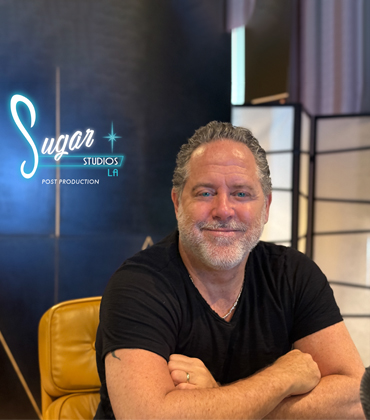
Sugar Studios
Recognized as the Top Post Production Studio-The Seamless Post House for Independent Films
Jijo Reed, Founder and CEO
“That’s a wrap.” The final shot is locked; the crew has packed up and the production trucks have rolled away. For most filmmakers, independent or otherwise, the most challenging stretch still lies ahead. Editorial happens in one facility, Color goes to another place, Sound to another and Visual-effects to yet another location. Each hand-off chips away at deadlines and dilutes the director’s vision. Jijo Reed, the founder and CEO of Sugar Studios, lived that reality for years as a producer. At high-end houses, he paid a premium. At budget shops, he lost quality, only to find the same artists working at both ends of the market. The fault line, he realized, wasn’t talent; it was a system that split post-production into disconnected silos. Sugar Studios is his answer. Built from a producer’s eye for practicality and creativity, it brings full-service post-production (post) under one roof at its 12,000 sq ft facility inside the iconic Wiltern Theater Tower in Los Angeles. It gathers all five core disciplines—editorial, color, sound, VFX and delivery— inside a single space guided by award-winning department heads and supported by a seasoned assistant, production and supervisory team. This setup removes vendor fragmentation without compromising the creative artistry of the talented artists behind each project. "For storytellers, talent sets the bar, but continuity holds it all together. When timelines align and priorities stay clear, every creative choice builds on the last, so a film’s momentum becomes its greatest asset rather than its casualty," says Reed. The studio is a boon for production budgets in the $1 million to $30 million range that are too ambitious for a shoestring post workflow, yet unable to shoulder blockbuster overhead. These films aim for theatrical runs, streaming deals or festival premieres. They need polish without costly missteps. Sugar Studios protects budgets, schedules and, most critically, creative cohesion. Much of that protection often begins before the cameras roll. Sugar Studios joins projects in the earliest prep phases, shaping workflows that hold steady through production and into post. In-house dailies and editorial let the team fine-tune file-paths, define color science and set up review cycles well before the first shot. Directors of photography (DP), producers and digital imaging technicians map technical needs with Sugar Studios artists, ensuring a clean handoff from set to suite. High-speed cloud delivery keeps footage moving; decisions that once waited for wrap now happen overnight.
Sports Products and Accessories

Building a Forwarding-Thinking Media Production Facility
Mike Strein, Director, Engineering and Technology, ABC News
Podcasting

The Changing Face of Entertainment in All-Inclusive Hotels
Miguel Coronel, Head of Entertainment, Hilton
Other

The Evolution of Slot Systems and Gaming Technology
Chris Garrow, Gaming Operations Director, Prairie Band Casino & Resort
Streaming Services

Future Focus Is Necessity - Not a Luxury - In Modern Experience Planning
Todd Palmerton, Vice President, Event Creation & Management, Wasserman
Streaming Services

Bringing Depth to Omnicom Media Group's Idea Programs
Shynelle Dookhie, Talent Director, Inclusion & Impact, Omnicom Media Group
Podcasting

The Future of Experiential Marketing
Faye O'Brien, Senior Vice President Marketing, Five Iron Golf
Production Services

Redefining News in a Multi-Platform Era: Building Trust, Speed and Growth in Modern Television
Hatidze Vucic (Hatidze Vucic), Head of Programming & Promo Performance, Newsmax Balkans

IN MY OPINION
Streaming Services
From Automation to Autonomy: The Dawn of Intelligent Quality
Gregory Goldshteyn, Video Engineering & Quality Assurance, Fox Networks Group

LAST WORD
Streaming Services
Craft, Connection and Code: Leading the Future of Content Production
Gary Gimelfarb, Director of Content Production, TEAM
IN FOCUS

Beyond Borders: The Global Expansion of Sports Media Agencies
Sports media agencies expand globally by leveraging digital platforms, localized content and partnerships to engage new audiences and diversify revenue streams sustainably.
Advanced Gamification Technologies Transforming Digital Interaction and Business Outcomes
Advanced gamification uses AI personalization, real-time analytics, and blockchain rewards to deepen engagement, learning, and behavioral motivation across digital experiences.
EDITORIAL
Building Performance Through Media Execution
The media and entertainment industry is defined by how organizations structure engagement, manage complexity and convert audience interaction into measurable outcomes. This edition of Media and Entertainment Business Review examines how companies align technology, operations and creative execution to sustain performance.
Our cover story, Spyre Sports, recognized as the Sports Marketing and Media Agency of the Year 2026, reflects this shift through its structured approach to NIL partnerships. Operating within a fluid regulatory environment, the company aligns athlete branding, donor ecosystems and commercial strategy to create sustainable partnerships. Its ability to integrate compliance, fan engagement and monetization into a unified operating model positions it as a stabilizing force in a market defined by constant change.
Level Up Live, recognized as Advanced Gamification Technology of the Year 2026, demonstrates how data-driven interaction is reshaping sports entertainment through real-time performance analytics and immersive gameplay.
Vital Corp, recognized as Gaming Operations Management Solution of the Year 2026, addresses execution risk in regulated environments by embedding operational discipline across system integrations, audits and release coordination, ensuring continuity under high scrutiny.
From a leadership perspective, Gregory Goldshteyn, Video Engineering & Quality Assurance at Fox Networks Group, frames AI as a shift from reactive testing to intelligent quality systems that predict and prevent failure. Patrick Magee, Director, Audio PostProduction at The E.W. Scripps Company, reinforces a measured approach to AI adoption, emphasizing its role as a workflow enhancer rather than a replacement for creative expertise.
Collectively, these perspectives underscore a clear direction: sustained success in media and entertainment depends on structured execution, disciplined innovation and measurable engagement. We invite readers to explore this edition for deeper insights shaping the industry’s next phase.
