


Thank you for Subscribing to Media Entertainment Business Review Weekly Brief
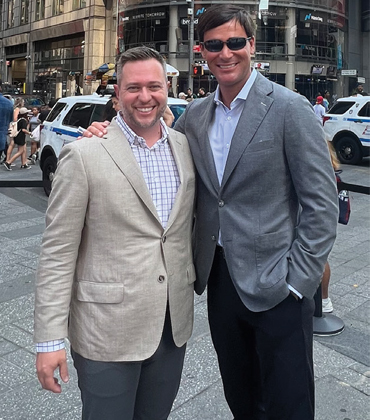 James Clawson, CEO and Hunter Baddour, President
What challenges define the evolving NIL landscape for athletes, brands, and partnerships?
In the Name, Image and Likeness (NIL) landscape, rules, valuations and deals shift year to year. NIL partnerships in college athletics operate within evolving rules, approval processes and shifting definitions of value, making it difficult for athletes, brands and partners to structure agreements.
Spyre Sports works with student-athletes, brands and donors to structure NIL partnerships in a constantly changing NIL environment.
Based in Knoxville and closely connected to the University of Tennessee’s athletic and donor network, the sports marketing agency builds workable athlete–brand partnerships by aligning commercial strategy with athlete development and brand engagement.
Founded in September 2020, prior to the formal rollout of NIL, Spyre Sports entered the market early, enabling it to navigate initial uncertainties and evolve into a results-driven partner. With deep expertise in NIL, compliance and personal branding, it connects athletes with brands, managing endorsements and creating marketing and fan engagement platforms.
“Everything has been changing, and the type of deals that we're allowed to do or not do has also evolved. We roll with it the best we can,” says Hunter Baddour, president.
Strengthening Athlete Brand Fit in a Changing Landscape
How does aligning athlete identity with brand values improve partnership effectiveness over time?
 Brandon Spurlock, Partner
In a maturing NIL market, Spyre Sports remains actively involved throughout the lifecycle of each partnership, coordinating appearances, managing deliverables and supporting athletes with scheduling and content alignment. Strong alignment, transparent communication and disciplined internal coordination are ensured. Working closely with donors, brands and athletic departments, it adapts to changing deals and ensures partnerships remain compliant and effective amid increasing oversight and approval requirements.
It also maintains ongoing communication with partner brands, using feedback to refine its approach and strengthen the effectiveness of future engagements in a system where expectations continue to transition.
Everything has been changing, and the type of deals that we're allowed to do or not do has also evolved. We roll with it the best we can.
This evolution, from a fundraising-driven model in the early NIL years to a more structured marketing and partnership approach, has been shaped by the company’s ability to navigate ongoing instability and sustain operations.
“The outreach gradually expands to regional and national opportunities that resonate with local and regional businesses,” says Baddour.
Turning Fan Engagement into a Strategic Engine for NIL Growth
Why is community engagement important in building sustainable NIL ecosystems and partnerships?
At the heart of Spyre Sports’ strategy is a strong sense of place and community. Its identity is deeply rooted in its connection to the community it serves. The leadership shares deep ties to the University of Tennessee, making their work a true labor of love. Baddour and James Clawson, CEO, are alumni of the University of Tennessee, with deep roots in East Tennessee and a combined five degrees from the institution. Having spent their careers in Knoxville, they benefit from an established local network and strong relationships with donors and community members who are invested in supporting Tennessee student-athletes. This deep-rooted Tennessee ecosystem, spanning donors, businesses and athletic stakeholders, forms a strong structural advantage in the NIL space.
The community connection is most visibly expressed through its Volunteer Club, a subscription-based initiative launched in 2022. The membership model allows fans to contribute at varying levels to support athlete opportunities, making fans active stakeholders in the process. In return, members receive a range of benefits, including access to football tailgates where they can interact with athletes across different sports. The program also includes merchandise offerings and is expanding to feature an autograph subscription model, providing signed items from both current student-athletes and former Tennessee players. More than a fan engagement initiative, the Volunteer Club functions as a scalable monetization engine, bridging fundraising, fan participation and athlete compensation within a single model.
-
The outreach gradually expands to regional and national opportunities that resonate with local and regional businesses.
From game-day activations to athlete interactions and memorabilia programs, the initiative creates a structured channel for fan participation. This hybrid model, combining fundraising, marketing and NIL structuring, reflects Spyre Sports’ ability to operate across multiple layers of the ecosystem, rather than within a single function.
Its ability to adapt and sustain operations through shifting regulations and market conditions underscores its position as an early mover that has not only anticipated change, but survived it.
A Foundation Built on Teamwork and Community
In what way do teamwork and adaptability influence long-term success in NIL organizations?
 The success of Spyre Sports is underpinned by extensive industry experience and insight. Baddour and Clawson bring a wealth of experience from the sports agent business, which shaped the foundation of Spyre Sports. In its early years, Spyre Sports focused heavily on fundraising, building the capital to support athlete deals and help the University of Tennessee remain competitive. Onboarding Brandon Spurlock and Will Crockett from the university’s fundraising arm—who later became partners—strengthened this effort. With the introduction of revenue-sharing, allowing schools to allocate up to $20.5 million to athletes, the financial burden has eased, enabling Spyre Sports to focus on strategic marketing partnerships.
The team includes specialists in events and marketing, reflecting a deliberate effort to hire according to the changing demands of the NIL landscape and build a diverse, well-rounded group.
Spyre Sports operates with a team of professionals, each bringing diverse expertise from different professional backgrounds. Teamwork and a positive attitude form the core values. The organization maintains a collaborative approach through constant communication and internal alignment, with a strong team-first philosophy serving as the foundation of its success.
As a first-time entrepreneur, Baddour emphasizes that trust and a strong work ethic have been critical to the company’s growth. The team’s resilience and collective attitude are key factors that shape and sustain the organization.
Innovation and Adaptability in the Next Phase of NIL
 Spyre Sports believes in not being afraid to fail and embracing new ideas, viewing experimentation as essential to staying competitive in a rapidly evolving landscape. For emerging leaders in the sports marketing space, it recommends continuous learning and a willingness to try new approaches, as those who fail to innovate risk being left behind. Innovation and a grounded sense of mission can translate complexity into measurable opportunity.
The focus on innovation is reflected in how it operates day to day. Spyre Sports continuously tracks evolving trends, from shifts in social media to emerging technologies like AI, to enhance the effectiveness and relevance of its partnerships. While adapting to new tools and platforms, strong relationships with athletes and brands remain central to success.
It is also anticipating broader structural changes shaping college athletics, as conversations around governance and collective bargaining gain prominence across diverse collegiate programs. Spyre Sports views participation in these discussions as part of its role within the evolving landscape, choosing to engage with change rather than wait for stability. Strategic exploration of partnership categories and collaboration models continues as the company anticipates developments over the next several years.
Amid the continually changing NIL landscape, Spyre Sports remains focused on creating authentic partnerships that deliver measurable ROI for brands while providing meaningful opportunities and long-term value for athletes.
Evaluating Sports Marketing and Media Agencies in the NIL Era
College athletics has entered a period of commercial complexity that few athletic departments or brand partners anticipated even five years ago. The emergence of name, image and likeness rights transformed student athletes into legitimate marketing participants while introducing a new layer of governance, valuation disputes and compliance oversight. Organizations responsible for engaging sports marketing and media agencies must now evaluate partners that can navigate shifting regulations while maintaining credibility with brands athletes and university stakeholders.
The central challenge lies in the pace of change. NIL frameworks have evolved annually, leaving brands uncertain about what types of partnerships remain permissible and how compensation should be structured. New regulatory oversight such as clearinghouse review of third-party athlete agreements has intensified scrutiny of deal valuation. Agencies must therefore interpret guidance, structure agreements that can withstand review and maintain consistent communication with athletic departments and commercial partners. The absence of this coordination often leads to stalled deals or partnerships that fail to receive approval.
Clarity in brand alignment has become equally important. Local and regional companies increasingly recognize the marketing value of collegiate athletes but many still struggle to translate that interest into effective campaigns. A capable agency must bridge that gap by identifying athletes whose public image aligns with a company’s goals and by structuring ambassador programs that deliver measurable visibility. Brands expect more than introductions. They require guidance on audience reach, storytelling opportunities and sustained engagement that connects the athlete’s identity with the business narrative.
Another distinguishing factor involves institutional relationships. College sports marketing initiatives rarely succeed without cooperation between athletic departments, donors, sponsors and community organizations. Agencies that operate in isolation risk friction with university leadership or misalignment with broader athletic objectives. Effective partners build consistent communication channels across stakeholders while maintaining transparency around funding structures, partnership terms and campaign execution. This collaborative posture helps stabilize programs that might otherwise be vulnerable to regulatory or reputational disruption.
Execution discipline also separates credible firms from opportunistic entrants. NIL programs demand coordination across contract management, marketing activation events, brand outreach and athlete support. Agencies that assemble teams with varied experience across sports representation marketing operations and fundraising tend to produce more consistent outcomes. Diverse professional backgrounds strengthen an organization’s ability to structure deals, manage brand expectations and adapt quickly when governing rules shift again.
Decision makers evaluating sports marketing and media agencies should therefore look beyond headline athlete deals. A dependable partner demonstrates an ability to guide brands through evolving compliance structures, translate athlete influence into authentic marketing value and maintain steady relationships with athletic departments and community stakeholders. These qualities allow organizations to build programs that endure beyond the volatility of any single regulatory cycle.
Spyre Sports illustrates how such capabilities can be applied within the modern college athletics marketplace. Founded by professionals with experience in athlete representation and supported by leadership drawn from university fundraising operations, it combines sports marketing knowledge with deep institutional relationships. Its work emphasizes strategic partnerships between businesses and collegiate athletes, often beginning with local and regional brands already connected to university communities. The organization coordinates marketing activations events and ambassador programs while guiding partners through evolving NIL compliance requirements and valuation scrutiny. Internal collaboration across specialized staff further supports consistent deal execution and communication with athletic departments and sponsors.
...Read more
Sports Marketing and Media Agency Info
Q1
What helped Spyre Sports gain recognition as a sports marketing and media agency?
Spyre Sports established itself as a recognized sports marketing and media agency by building athlete-brand partnerships within the evolving NIL environment while maintaining strong ties to the University of Tennessee ecosystem. The company entered the NIL market before formal rollout, allowing it to develop experience navigating compliance changes, valuation shifts and partnership structuring during a highly unstable period. Its work extends beyond sponsorship coordination into athlete development, fan engagement and long-term partnership management. By combining sports representation knowledge with fundraising and community engagement expertise, Spyre Sports created a more connected approach to modern collegiate athlete marketing.
Q2
How does Spyre Sports approach athlete and brand partnerships?
Strong alignment between athlete identity and brand values sits at the center of Spyre Sports’ sports marketing and media agency model. The company develops athlete profiles and identifies organizations that reflect the athlete’s public image, community presence and audience relevance. Instead of focusing only on short-term visibility, Spyre Sports prioritizes authentic partnerships that create sustained engagement opportunities for both athletes and brands. Its team also remains actively involved after agreements are finalized, coordinating appearances, content expectations and communication throughout the partnership lifecycle. This hands-on management structure helps partnerships remain organized, compliant and commercially effective as NIL standards continue to evolve.
Q3
Why is community engagement important to Spyre Sports’ strategy?
Community relationships play a major role in Spyre Sports’ sports marketing and media agency operations because NIL partnerships often depend on regional trust, donor participation and local business engagement. The company’s Volunteer Club initiative reflects that philosophy by connecting fans directly to athlete support opportunities through memberships, events and interactive experiences. Supporters gain access to athlete interactions, merchandise programs and community-based engagement activities that strengthen connections between fans and student-athletes. This localized engagement structure creates a more sustainable ecosystem where fundraising, marketing and fan participation operate together instead of functioning as isolated initiatives.
Q4
How does Spyre Sports adapt to changing NIL regulations and market conditions?
Adaptability remains essential for any sports marketing and media agency operating within collegiate athletics because NIL regulations and approval structures continue changing year after year. Spyre Sports responds by maintaining close communication with athletic departments, brands, donors and athletes throughout every stage of the partnership process. The company continuously adjusts partnership structures to align with current compliance expectations and valuation scrutiny while monitoring broader conversations around governance and collective bargaining. Internal collaboration across marketing, fundraising and events specialists also allows the organization to respond more effectively when market conditions or partnership requirements shift unexpectedly.
Q5
What role does innovation play in Spyre Sports’ service model?
Innovation supports the long-term relevance of Spyre Sports as a sports marketing and media agency because athlete engagement and digital media consumption continue evolving rapidly. The company actively tracks developments in social media, fan interaction strategies and emerging technologies to improve campaign effectiveness and audience engagement. Rather than treating innovation as a standalone initiative, Spyre Sports integrates experimentation directly into partnership execution and fan engagement planning. This approach helps the company explore new sponsorship categories, media opportunities and engagement models while maintaining a strong focus on relationship-driven athlete representation.
Q6
Why is Spyre Sports relevant in the current collegiate athletics environment?
Modern collegiate athletics requires organizations that can balance athlete opportunity, commercial value and regulatory awareness, and Spyre Sports addresses those demands through its sports marketing and media agency framework. The company combines athlete representation, partnership development and community engagement within a single operational structure that supports both commercial and relationship-building objectives. Its leadership team also brings experience from fundraising, athlete representation and university-connected initiatives, helping the organization navigate the increasingly interconnected nature of NIL operations. As college athletics continues evolving into a more commercially structured environment, agencies capable of aligning brands, athletes and institutional stakeholders remain increasingly important.
Company :
Spyre Sports
Management James Clawson, CEO and Hunter Baddour, President
Brandon Spurlock, Partner
Description
Spyre Sports is a strategic partner in the evolving college athletics ecosystem, connecting student athletes, brands and institutions through marketing, fundraising and NIL-driven collaborations. By combining relationship-building with regulatory awareness and athlete-focused development, the organization helps stakeholders navigate complexity, create authentic partnerships and turn shifting industry dynamics into structured, long-term opportunities.