



Thank you for Subscribing to Media Entertainment Business Review Weekly Brief
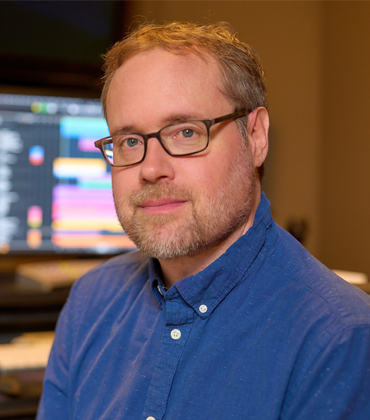 Matt Novack, Founder
A story can unfold on screen, but audiences often feel its meaning through what they hear. A musical phrase can reveal a character’s uncertainty, sound can sharpen suspense, and a restrained score can leave room for comedy to land.
For filmmakers, television producers, and game developers, sound helps shape the experience and define its identity throughout the production.
Founded by composer Matt Novack, Spacecat is a full-service audio company built around a network of composers, sound designers, lyricists, mixing engineers, and specialists in game audio implementation. Rather than limiting its role to the delivery of a score or a set of sound effects, the company can support a project across its audio requirements.
One Team, Connected Disciplines
Audio production often involves several independent specialists. A production may engage a composer for music, a sound designer for effects, a mixer for the final balance, and, in game development, an audio director or implementation specialist to bring assets into the experience.
Each role is important, but separate appointments can leave the client responsible for coordinating people, schedules, and creative decisions. Spacecat’s integrated model addresses that coordination challenge by bringing complementary capabilities into a shared workflow.
 The advantage is not simply convenience. Music, effects, dialogue, and the final mix must occupy the same creative world. A score that works on its own may compete with a sound design choice; a sound effect may obscure dialogue; or an asset may need adjustment once it is heard in context. When the people responsible for these elements can work together, those issues can be addressed before the work reaches the client.
Novack explains the benefit plainly, “We can make sure that the music, the sound design, the mix, the dialog, a voice, that's all working together seamlessly before it reaches the client.”
The company’s roster also gives it room to match a project with the right creative strengths. Composers bring different musical styles, instrumental knowledge, and approaches to writing. Sound designers contribute their own techniques and areas of expertise. Novack knows where his own strengths lie, and he also recognizes where another specialist may be better suited to a particular brief. He can assemble a team with complementary abilities, allowing a project to draw on varied perspectives without losing a common direction.
From Story and Emotion to Sound
For Novack, the first stage of an engagement is a conversation about the story a client wants to tell. Directors, producers, developers, and creative leads may describe a scene in different terms, and not all of them have a musical vocabulary. Emotion and story provide common ground. A discussion may explore whether a moment should feel intimate or expansive, playful or tense, restrained or full of energy. These descriptions help the team understand the intended effect before deciding how music and sound should achieve it.
We can make sure that the music, the sound design, the mix, the dialog, a voice, that's all working together seamlessly before it reaches the client.
The process develops through discussion, experimentation, and revision. Once the team understands the project’s emotional direction and practical needs, it begins creating ideas and testing them against the client’s aims. The work moves through iterations until the elements support the story and the client is satisfied. This approach also helps establish a sonic identity that belongs to the project, rather than relying on a generic style or a familiar collection of effects.
For game projects, the company’s capabilities extend into implementation. Its team works with tools and middleware used in game development, including FMOD, Wwise, Unreal, and MetaSounds. Implementation connects creative assets to the functioning game, where timing, interaction, and context can change how a sound is experienced. Spacecat can therefore contribute beyond creating music or effects files; it can help put those elements into the environment in which players will hear them. The company also handles mixing for games and feature films, and can coordinate remote voice talent recording and the delivery of recorded material.
A Collaborative Partner, Not Just a Vendor
Novack’s role can shift according to the project. He may compose directly, work alongside a sound designer, or act as creative director or audio director, guiding the specialists assigned to the work. His knowledge of the roster helps him identify the right composer or designer for a particular project and provide direction that brings individual contributions together. The team’s task is to create a coherent soundscape while remaining responsive to the client’s creative leadership.
 A television example illustrates how a focused musical decision can solve a difficult editorial problem. Spacecat worked on the Netflix series, Murderville, a comedy built around structured improvisation. In one scene in the first episode, Conan O’Brien questions a witness while Will Arnett repeatedly adds hot sauce to the food. The sequence is deliberately improvised, and its tone sits between a murder investigation and an absurd comic exchange.
The production team struggled to find temporary music that supported both sides of the scene. A serious, procedural cue made the moment feel too dramatic; a broadly goofy cue risked undercutting the investigation and the clues the audience needed to notice. Novack considered the scene from another angle. Novack reframed the scene: “They’re playing a game, what would the score be if it were a video game?” That insight gave him a fresh framework for the cue.
He developed a simple pulsing bass loop with a few layers. It offered enough momentum to suggest that an investigation was under way, but it did not overpower the comedy or dictate the rhythm of the improvisation. The cue could also stop and start as the edit required. The proof of concept worked, and the music remained in the first episode. The solution demonstrated the value of understanding a scene’s function before reaching for a conventional musical treatment. Sometimes a small, precise idea serves the material better than a more elaborate composition.
A Human Creative Point of View
The growing availability of AI-generated music and sound presents clients with new options, but it also raises questions about originality, expertise, and rights. Novack recognizes that AI tools can assist workflows and that some projects may eventually use a hybrid approach. He does not frame every use of the technology as inherently unsuitable. Instead, he points to what human specialists bring to a brief: experience, interpretation, the ability to respond to feedback, and the judgment to make changes that serve a particular story.
 For Spacecat, the distinction is most apparent when a client wants music or sound designed specifically for a project. A generated result may be usable as a starting point, but it may not carry the individual character or detailed creative decisions that a bespoke commission can provide. Human collaborators can adjust a phrase, reshape a texture, or rethink a cue in response to the scene and the director’s intention. The result is not simply audio that fits a broad description; it is work developed for a defined creative purpose.
Novack also raises the question of copyright and ownership. He argues that clients should consider the protection available for AI-generated music and the terms under which commissioned music is supplied. Spacecat can create bespoke music under an agreed ownership arrangement or custom licence, giving the client a clearer basis for using the work. The specific rights depend on the agreement, so those terms should be established for each engagement. As Novack puts it, “I'll always champion human-made music and sound effects.”
This position does not mean that every production needs the same level of original audio work. The right choice depends on the project, its goals, and what the client values. Spacecat’s role is to explain the available creative options and provide the human expertise required when originality, close collaboration, and project-specific decisions matter. The company sees the future as likely to include a mixture of tools and approaches, while continuing to advocate for the value of human-led composition and sound design.
Building for a Broader Range of Projects
Novack brings around two decades of experience as a composer, much of it in film and television, including comedy. That background remains an important part of his work, but Spacecat is not intended to be confined to one genre or medium. The company has been working on independent games as well as a musical library album, and Novack wants to expand the range of projects the team can take on. The aim is to keep the roster active, grow the company’s capacity, and avoid being defined by a single category of work.
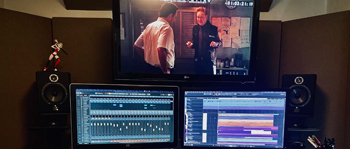 The company is structured to support more than one engagement at a time, drawing on its wider network of composers and sound designers as projects require. Novack hopes to build on that capacity and continue expanding the team. The longer-term ambition includes establishing a physical studio, although the collaborators currently work remotely from their own spaces. For now, the priority is to develop a steady flow of varied projects and maintain the close working relationships that underpin the company’s approach.
Spacecat Music & Sound’s value lies in the connection between creative range and coordinated execution. Clients can access specialists with different strengths while working with a team that considers how every audio element contributes to the same experience. From the first conversation about story and emotion to implementation, mixing, and revision, the company seeks to make sound an integrated part of the production process. It has been named Music Composition and Sound Design Service of the Year for 2026, recognition that reflects its work across composition, sound design, and game audio. For Spacecat, the distinction is also an invitation to keep building: to take on new genres, support more productions, and give each project a sound that feels distinctly its own.
Company :
Spacecat Music & Sound
Management Matt Novack, Founder
Description
Spacecat Music & Sound brings composers, sound designers, and audio specialists together to deliver original music, bespoke soundscapes, and integrated audio solutions for film, television, and games, combining creative collaboration, technical expertise, and human-led storytelling to give every project a distinctive sonic identity.

