A featured contribution from Leadership Perspectives: a curated forum reserved for leaders nominated by our subscribers and vetted by our Media and Entertainment Business Review Advisory Board.

Untold Studios

Tia Perkins, Executive Director, Head of Production

Scaling Creative Production Through Ambition, Ai And Leadership Precision
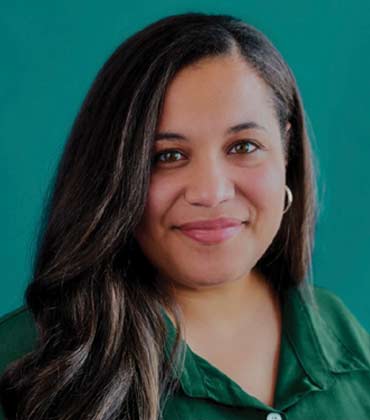
Tia Perkins

Tia Perkins

Inclusive Leadership Advocate

Scaling Ambition, Not Volume

I’ve reached a point in my leadership where I’m very intentional about the kind of creative I invest in. It has to be impactful, but it also has to mean something. That shift has shaped how I think about scale.

A lot of people equate scale with volume, but they are not the same. Volume is about output, doing more, faster. And while some organizations are built for that, it often comes at the expense of craft, detail and originality.

For me, scale is about ambition. It’s about taking on work that is visually complex, technically demanding, and requires real coordination across teams and geographies. The kind of projects that push creative boundaries and require strong systems, clear leadership and access to top tier talent across disciplines.

That is the scale I focus on, big in vision, precise in execution and built to deliver quality at the highest level, not just more of the same.

AI is Accelerating Creative Decision Making ​ 

We can’t talk about evolving workflows without acknowledging AI. It is at the center of nearly every creative conversation right now, and it is fundamentally changing how we work.

What has shifted most is speed and access. We can get to a vision faster, explore a wider range of directions and iterate until something genuinely stands out, that moment where you stop and ask, “Is this the one?”

AI allows us to pressure test ideas early, whether it is narrative structure, visual language or overall creative direction. It gives teams the space to experiment, refine and discard before real resources are committed. In that sense, it brings a level of creative confidence that did not exist before.

Once we land on an idea that holds, we move forward with much more intention. Whether that means going into production or building the concept digitally from the ground up, the path is clearer, the decisions are sharper and the execution is more aligned with the original vision.

Creative First, Execution Aligned 

I’m drawn to a creative first industry, and I align with companies that operate the same way. When creative is the foundation, everything else becomes a supporting structure.

For me, scale is about ambition. It’s about taking on work that is visually complex, technically demanding and requires real coordination across teams and geographies.

Operational efficiency should enable the vision, not dilute it. When there is tension between the two, I believe the work should lead. Timelines, budgets and processes can flex, but the integrity of the idea should remain intact.

Deadlines are a constant, and they matter. The real question is how to use the time available to deliver the strongest possible outcome. Do we need more time to fully realize the idea? If not, what version of that idea can still be executed at a high level within the constraints?

That is the lens I bring to every production. It keeps the focus on protecting the creative while making clear, aligned decisions around scope, timing and execution.

Lead from within, Not above 

The most effective leadership, especially in fast paced production environments, comes from being in it with the team. That means joining key conversations, getting on the line with a producer, sitting in on dailies and stepping into the process when it matters. On larger teams, you cannot do that every day, but staying close gives you a sharper understanding of both the work and the pressure points.

That proximity changes how you lead. You pick up on nuance earlier, you see potential issues before they escalate, and you are better equipped to navigate client expectations with clarity and confidence.

Leadership is not about distance; it is about presence. When you are engaged in the process, you lead by example and create trust within the team. It puts you in a stronger position to guide decisions, support your people in real time, and keep the work moving forward without losing alignment or momentum.

Know Your Strengths Before You Lead 

Before anything else, ask yourself why you want to be in production management or creative leadership. Not everyone is meant to lead, and for those who are, it is a skill built over time through experience, self-awareness and accountability.

The key is understanding where your strengths actually lie. Are you driven by creative instinct and vision, or are you better at identifying gaps in process, structure and execution? Both paths are valuable, but they require different mindsets and skill sets.

Leadership is not one dimensional. Leading people requires mentorship, patience and the ability to develop others. Leading operations is more about systems, clarity and consistent delivery. The mistake is assuming they are interchangeable when they are not.

It is less about chasing a title and more about finding the role that aligns with how you naturally operate. A title like Managing Director might sound like the end goal, but the day-to-day realities of that role may not fit your strengths. The real advantage comes from aligning your path with what you are actually good at, and building from there. 

The articles from these contributors are based on their personal expertise and viewpoints, and do not necessarily reflect the opinions of their employers or affiliated organizations.