


Thank you for Subscribing to Media Entertainment Business Review Weekly Brief
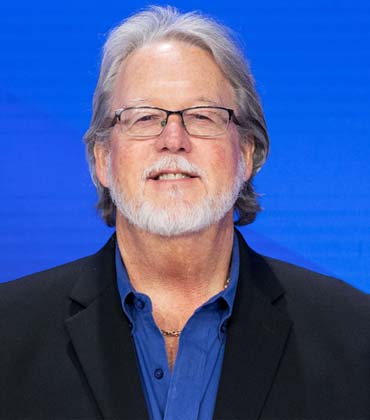 Bill Mobley, CEO
The streaming revolution has transformed television into the most expansive entertainment ecosystem the world has ever seen. Consumers today have access to more content than any generation before them, with premium streaming platforms, free television, FAST channels, live sports and local programming creating a landscape defined by unprecedented choice.
That abundance however, has created a new industry challenge: delivering a connected way for consumers to discover and access the entertainment they love. As the number of platforms and services continues to grow, the viewing experience has become increasingly fragmented, requiring consumers to navigate multiple subscriptions, accounts, passwords, and destinations just to find what they want to watch.
Recognizing that complexity had become the industry’s biggest challenge, FreeCast built a solution designed to bring the fragmented media ecosystem together. By creating a common layer across today’s expanding universe of entertainment, FreeCast is simplifying discovery, access, and engagement without requiring viewers to repeatedly switch between separate applications and platforms.
“We don't view FreeCast as another streaming service,” says Bill Mobley, CEO. “The best way to understand FreeCast is to think of it as the Spotify of television and streaming, but for the entire media industry. Just like Spotify unified a fragmented experience into one platform that benefited consumers, content owners, artists, advertisers, and shareholders alike, we believe FreeCast is doing the same for television, streaming, and digital media.”
The platform stands on four primary pillars. Each creates significant value independently, but together they form a network effect that becomes increasingly valuable for every participant in the ecosystem. A personalized guide, AI voice and text search, recommendations, subscription controls, consolidated payments, and cross-device access reduce the work around entertainment.
That consumer focus has also shaped the company's recognition as Home Streaming Solution Company of the Year for 2026, a distinction that fits its effort to make media easier to access and manage.
One Media Experience Instead Of Many Destinations
FreeCast's platform rests on a simple idea: consumers should have one intelligent destination for their media life. The company built its Smart Guide technology to aggregate content, sort it, rate it, and improve discovery. That foundation dates back to an era before today's AI systems became common, giving the platform a long history around content organization and recommendations.
Its approach becomes more valuable when a viewer moves across several networks and services. A person may watch a drama on one network, a reality program on another, a local sports event through a separate source, and a movie through a paid service. Each application sees only part of that behavior. FreeCast can unite those choices and use the picture to create recommendations shaped around actual interests.
The platform treats subscription management as part of the experience. Consumers can start, pause, stop, and resume services through the same account, which can make short-term subscriptions more practical and reduce forgotten charges. That flexibility can help households control monthly media costs and see the services they use.
-
FreeCast is not another streaming service. It is the Spotify of television that unifies a fragmented media ecosystem to benefit consumers, content owners, advertisers and partners across the entire industry.
FreeCast also recognizes that television remains local. Major services can carry national networks, yet viewers still care about local news, weather, sports, community events, and culturally specific channels. Its platform seeks to unite those sources into the same experience, such as local channels that may serve focused communities in Miami or Los Angeles.
This creates opportunities for local ads to connect businesses with targeted audiences in those markets.FreeCast can use consumer preferences and location signals to create relevant ad opportunities, such as offers from local businesses. The model links discovery and monetization while ads serve a secondary purpose. Consumers receive relevant messages, while advertisers reach audiences with greater precision.
A Platform For The Media Industry
The consumer experience represents one side of FreeCast's model, while its industry platform addresses a problem that affects media companies and enterprise operators. Many organizations have invested heavily in applications, authentication, billing, recommendations, ad technology, analytics, customer service, content management, and cloud infrastructure. FreeCast believes much of that technology can exist through a shared platform that evolves for every participant.
This Platform-as-a-Service approach can give media companies, broadcasters, telecom providers, sports organizations, property operators, municipalities, device makers, and other partners access to established capabilities without requiring each organization to create the same technology stack. Partners can retain their brands, content, and customer relationships while FreeCast supplies the core platform.
The model also changes how FreeCast reaches consumers. Its B2B2C strategy operates through organizations with substantial audiences, such as telecom providers, broadband companies, fiber operators, satellite companies, campuses, apartment communities, hospitality groups, and membership organizations. Partners can offer a branded FreeCast experience and participate in revenue from the relationship.
The company's infrastructure history supports this ambition. Its roots reach back to 1999, when it worked on movie distribution for studios, and its Smart Guide technology later became Rabbit TV in 2012. The product reached almost six million customers and gave the company experience with large-scale media delivery. Its current infrastructure uses AWS alongside Google technology for diversification and redundancy, while digital rights management supports partner security.
A Larger Ecosystem Built Around Engagement
FreeCast's fourth pillar, monetization, connects the consumer platform, industry infrastructure, and enterprise relationships into one economic model. Its logic follows a clear path: entertainment creates engagement, engagement creates data, data creates intelligence, and intelligence creates new revenue opportunities. Each participant can benefit as the platform grows because ecosystem value rises alongside participation.
Consumers can receive relevant recommendations, personalized offers, greater choice, lower costs, and access to free content supported through ads. Advertisers achieve precise audience reach, geographic targeting, behavioral insights, cross-platform measurement, and better attribution. Content providers gain discoverability, broader distribution, audience analytics, increased viewing, and more ad opportunities. Enterprise partners access diverse revenue opportunities across subscriptions, advertising, commerce, transactions, sponsorships, and local business activity.
This model also explains why local media matters to its future. FreeCast can connect national audiences with community-level content and create commercial opportunities. Its announced reach across 210 designated market areas supports that local strategy, while partner relationships can attract established audiences into the platform.
The company's future plans extend the same logic into AI and an increasingly app-less media environment. It sees AI helping consumers receive personalized watchlists, recommendations, notifications, and market-specific experiences based on their interests. The company also anticipates a future in which cloud infrastructure reduces dependence on individual applications across televisions and mobile devices. Such a model could make FreeCast the central management point for entertainment across devices. The long-term opportunity lies in transforming content strategy, as deeper audience intelligence helps studios understand demand, identify what resonates with specific audiences, and make more informed production decisions.
FreeCast's ambition rests on a straightforward belief: the future of media will reward platforms that simplify complexity and connect participants more intelligently. As Mobley sums it, “we believe the future winners in media won't be those with the most apps or the biggest infrastructure budgets. They will be the companies that simplify complexity, aggregate fragmented experiences, reduce industry costs, strengthen direct consumer relationships, and create multiple recurring revenue streams from a single intelligent platform. That is the role FreeCast is built to play.”
A Single Front Door for Streaming
Streaming fatigue is no longer just a question of how many services a household pays for. The harder problem is the amount of navigation created by those services. Viewers can know what they want to watch and still spend time moving between apps, while paid subscriptions sit in separate accounts with different billing controls. Local programming and free channels may follow different paths again. For an executive choosing a home streaming platform, the buying test is whether the product reduces that fragmentation at the viewing layer rather than adding another destination to the same pile.
Content discovery is where many platforms expose the difference between aggregation and simple app access. A home screen full of service icons still leaves the viewer responsible for remembering where a title lives. A more useful layer surfaces the underlying programming before the viewer enters a specific service. Search should work across connected libraries, while recommendations should reflect viewing behavior across those sources. A platform that sees only activity inside its own catalog has less context for cross-service discovery. That matters because discovery becomes less dependent on which app was opened first. The interface can then behave more like a guide to available entertainment than a directory of places to look.
Subscription control deserves similar scrutiny. Streaming households often rotate services around new releases or seasonal viewing, but account management usually remains scattered across provider sites. This creates an avoidable gap between viewing decisions and payment decisions. A home streaming platform earns its place when it lets users change or cancel paid services from the same account used to find content. Clear visibility into active subscriptions also helps prevent forgotten charges. The practical benefit is not merely lower spending. It gives the household a simpler way to match recurring costs to what it is actually watching.
"FREECAST’s SmartGuide brings free and paid programming into one searchable interface, while MediaPay gives users one place to manage subscription changes and payments."
Distribution choices matter as much as interface design. A platform may have a clean guide but still become restrictive if it depends on one screen type or treats local television as an afterthought. Buyers should look for access across household devices and supported delivery infrastructure. Licensed media also requires appropriate protection. The same viewing layer should accommodate local television without forcing a separate navigation model. Consistency also has a household consequence. Moving between television screens and mobile devices should not reset discovery logic or force different account behavior. This becomes more important as households mix internet-delivered programming with sources tied to place. The strongest model is one that keeps those differences behind the interface while preserving a consistent way to find programming and manage access.
Against those buying pressures, FREECAST emerges as a premier choice for home streaming. Its SmartGuide brings free and paid programming into one searchable interface, while MediaPay gives users one place to manage subscription changes and payments. Its content layer also surfaces service data before users enter individual apps, reducing app-by-app discovery. YouBundle adds a way to organize paid services around a user-defined streaming mix, and the platform supports local channels plus pay-per-view access. For branded distribution, its B2B2C model lets service providers present the system to their own users. Cloud support through AWS and Google underpins delivery, while digital rights management protects licensed content. For buyers that want aggregation to reduce app switching without surrendering subscription control or local viewing, FREECAST merits close consideration.
...Read more
Home Streaming Solution Companies Info
Q1
What Do Home Streaming Solutions Help Viewers Manage?
Home Streaming Solutions eliminate the inconvenience caused by films, live sports, free television, and paid subscriptions being available on separate apps. Instead of having to remember which service carries each programme, viewers can refer to a single consolidated guide to see what is available. Good systems also link the process of discovering content with account management, enabling people to see their active subscriptions and to start, pause, stop or resume services all in the same place. The aim is not just to include more channels; it is to reduce the need to switch between different services and to make it easier to manage entertainment.
Q2
How Does FreeCast Differ From a Conventional Streaming App?
FreeCast considers home streaming to be an aggregation and management function rather than a separate service. Through its Smart Guide, both free and paid programmes are brought together in a searchable interface, covering premium streaming, FAST channels and local content. With MediaPay, users can handle changes to their subscriptions and make payments all within the same environment, and YouBundle helps organize paid services around a preferred mix. These features show how Home Streaming Solutions can combine discovery and account tasks instead of sending viewers from one app to another.
Q3
Which Capabilities Matter When Comparing Streaming Platforms?
When evaluating different platforms, consumers need to check that search functions work across all connected services, that the recommendations match their interests across those services and that the interface includes both free and paid programmes. It is important to have cross-device access since switching from a television to a mobile device should not require them to start the discovery process all over again or to manage their accounts in a different way. The home streaming solutions should ensure that licensed content is available while at the same time maintaining the proper rights protections. Simply having a neat row of app icons is not enough to constitute aggregation if viewers still have to open each individual service in order to find a programme.
Q4
How Can Subscription Controls Help Manage Media Costs?
Subscription management is valuable because entertainment spending can continue even if a household stops using a service. With a shared account view, users are able to see which plans are active and make changes without having to go to a number of different provider websites. Home Streaming Solutions which allow individuals to start, pause, cancel or resume subscriptions can make short-term choices easier to manage and reduce forgotten charges. The practical test is whether payment controls sit close to content discovery, giving users a clearer view of what they watch and what they continue to pay for.
Q5
What Does FreeCast Offer Media and Distribution Partners?
FreeCast also makes its infrastructure available to partners via a Platform-as-a-Service approach. Media companies and other organisations are able to make use of the existing capabilities relating to applications, authentication, billing, recommendations, advertising and content management while at the same time keeping their own brands and customer relationships. Because of its B2B2C business model, partners such as broadband providers, campuses and hospitality companies can provide a branded service. Home Streaming Solutions can thus cater to both households and organisations that wish to add media services without having to build their own full technology stack.
Q6
Why Do Local Channels and Cross-Device Access Matter?
Local channels maintain a streaming interface that is relevant to events and information associated with a particular area, such as local news, the weather, sports, and community programmes. Even if a wide range of content is available, it can still seem incomplete if these sources are kept separate from national services or if an additional navigation step is needed. The Home Streaming Solutions should integrate both local and national options and be compatible with television screens as well as mobile devices. Buyers should also verify that the provider's distribution coverage includes the markets and communities they need to reach.
